

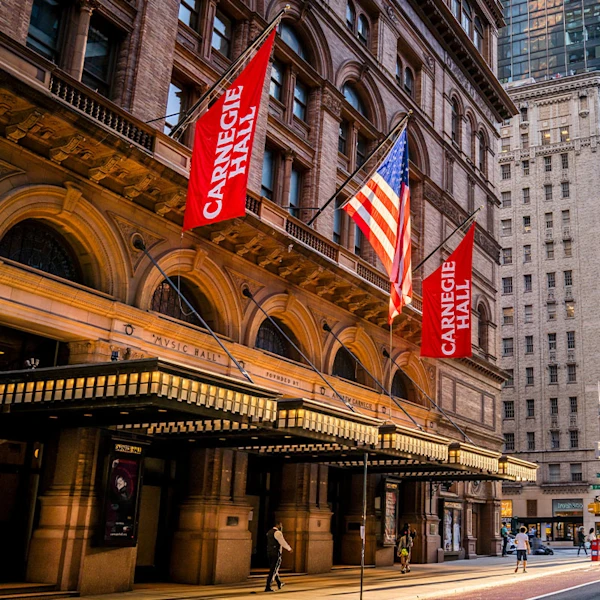
Carnegie Hall
To step into Carnegie Hall is to enter a cathedral of sound. Its legendary acoustics offer a "golden" warmth you can't find elsewhere. From Tchaikovsky to the Beatles, you’re sharing space with history. In a city that never stops, this is where the world finally stops to listen. Pure magic.
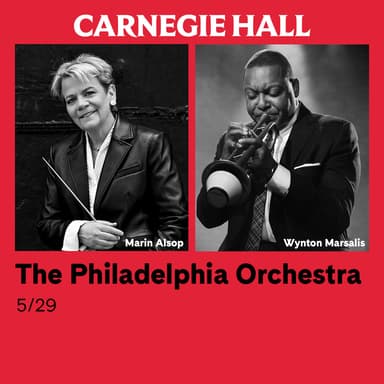
The Philadelphia Orchestra
While Mahler famously composed this symphony during one of the sunniest chapters of his life, the music itself is a massive, high-stakes drama that’s best known for the literal "hammer blows of fate" that crash through the finale. It’s a 70-minute emotional marathon, but having the Philadelphia Orchestra—and Yannick’s boundless energy—at the helm ensures the wall of sound feels lush and intentional rather than just heavy.
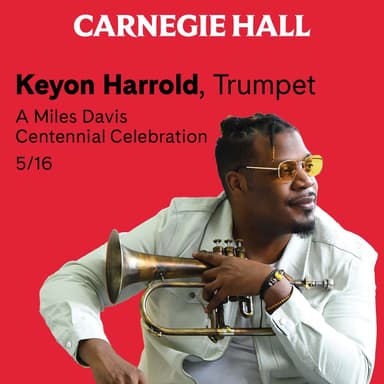
Keyon Harrold: A Miles Davis Centennial Celebration
Keyon Harrold isn’t just playing the notes; he’s channeling the restless, avant-garde spirit of Miles Davis in a tribute that feels more like a conversation than a cover set. It’s a sharp, high-energy celebration at Jazz at Lincoln Center that skips the museum-piece formality to focus on the grit and constant reinvention that made Miles a permanent fixture of the New York sound.
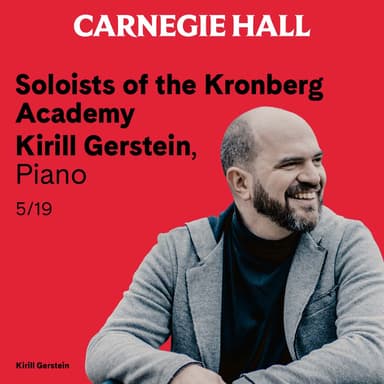
Soloists of the Kronberg Academy - Kirill Gerstein, Piano
This isn’t your standard, stiff recital; it’s a high-energy collaboration that brings the precision of the Kronberg Academy’s rising stars together with Kirill Gerstein’s formidable technique. The program trades formal pomp for a sense of shared discovery, making the complex chamber arrangements feel remarkably intimate and alive.
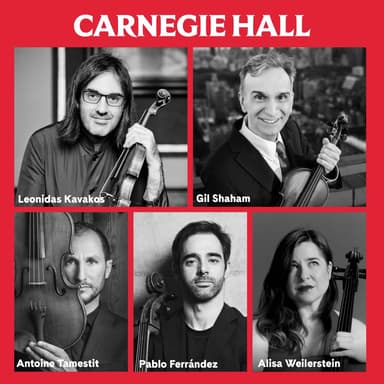
Beethoven’s “Kreutzer” Sonata and Schubert’s String Quintet
The "Kreutzer" Sonata is usually a high-wire act for just two people, but this rare arrangement for a string quintet adds a rich, symphonic heft that Beethoven himself reportedly craved for the piece. You’re essentially seeing a classical "supergroup" of five world-class soloists—including Leonidas Kavakos and Alisa Weilerstein—abandon their solo careers for a night to play as a tight-knit ensemble in the city's best acoustic chamber.
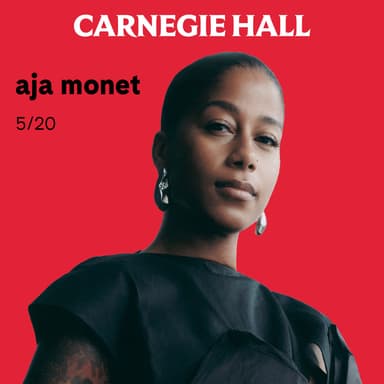
aja monet
Brooklyn-born poet aja monet describes herself as a "surrealist blues poet," but in practice, that means her sets feel less like a formal reading and more like a late-night jazz session where the words happen to be the lead instrument. Backed by a live band, she navigates the space between community organizing and high art, delivering a performance that’s as much about the groove of the upright bass as it is about her sharp, soulful commentary on Black resistance and joy.
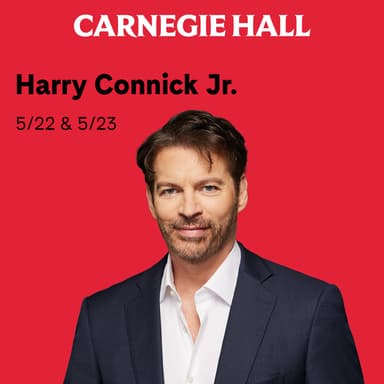
Harry Connick Jr.
This is a massive bucket-list moment for Harry Connick Jr., marking his long-awaited headlining debut on Carnegie’s main stage with a set that spans everything from intimate solo piano to a full big-band blowout. He’s also premiering a brand-new orchestral piece dedicated to his late mother, Anita, making the night feel less like a standard concert and more like a deeply personal homecoming for one of the city's favorite jazz icons.
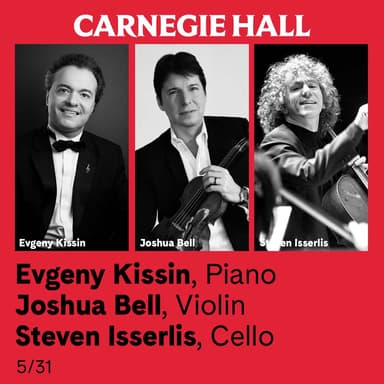
Evgeny Kissin, Piano / Joshua Bell, Violin / Steven Isserlis, Cello
This isn't just a high-profile booking; it’s a reunion of three longtime friends—Evgeny Kissin, Joshua Bell, and Steven Isserlis—who typically sell out the hall solo but are coming together for a program steeped in Jewish memory and shared history. The second half belongs entirely to Tchaikovsky’s massive A-minor trio, a piece so demanding and emotionally raw that it requires exactly this level of individual virtuosity to keep the dense, folk-infused melodies from feeling overwhelmed.
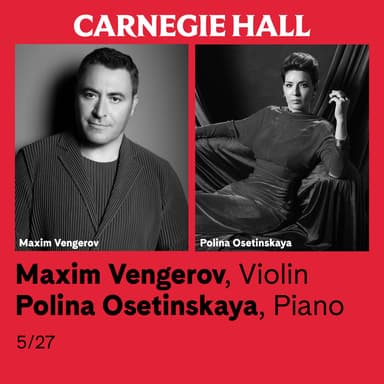
Maxim Vengerov, Violin / Polina Osetinskaya, Piano
Violinist Maxim Vengerov and pianist Polina Osetinskaya both began their careers as high-profile child prodigies, and that decades-long shared history is exactly why their duo recitals feel so telepathic and composed. This specific program navigates the sharp, volatile edges of Shostakovich’s Violin Sonata before shifting into the grand, impassioned sweep of Brahms’s Third—all performed on Vengerov's famous 1727 "ex-Kreutzer" Stradivarius.